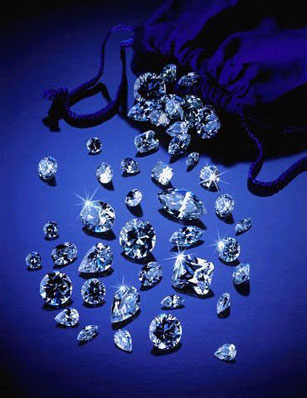
While most diamonds are in the colorless to light yellow range, some have a natural color that is deep, distinct, and opulent. These are known as fancy-color diamonds and are often blue, brown, or pink. Unlike colorless and near-colorless diamonds which are valued for their lack of color, fancies are valued for the intensity of their color. Colored diamonds are a small but increasingly popular segment of the diamond market.
The physical conditions necessary to color a diamond naturally occur very seldom, making natural color diamonds extremely rare. For every natural color diamond, there are 10,000 colorless ones that have made the trip from the earth’s depths to its surface. It is this entirely natural process of geographical formation which ensures that each natural color diamond is one of a kind.
The formation of natural color diamonds is a process that requires the presence of additional trace elements and distortions to the typical diamond crystal. During the creation of a diamond, if an element interacts with its carbon atoms, the color can change. Natural radiation and pressure on a diamond’s structure can also intensify its color.
Rather than emphasizing the brilliance and fire coveted in near-colorless diamonds, these stones are all about the color intensity. The Argyle mine in Western Australia launched a massive marketing campaign some time ago that helped change the public’s perception of these previously overlooked diamonds. The 1987 sale of the Hancock Red, at a record auction price of $926,000 per carat, further magnified the allure of fancies.
The physical conditions necessary to color a diamond naturally occur very seldom, making natural color diamonds extremely rare. For every natural color diamond, there are 10,000 colorless ones that have made the trip from the earth’s depths to its surface. It is this entirely natural process of geographical formation which ensures that each natural color diamond is one of a kind.
The formation of natural color diamonds is a process that requires the presence of additional trace elements and distortions to the typical diamond crystal. During the creation of a diamond, if an element interacts with its carbon atoms, the color can change. Natural radiation and pressure on a diamond’s structure can also intensify its color.
Rather than emphasizing the brilliance and fire coveted in near-colorless diamonds, these stones are all about the color intensity. The Argyle mine in Western Australia launched a massive marketing campaign some time ago that helped change the public’s perception of these previously overlooked diamonds. The 1987 sale of the Hancock Red, at a record auction price of $926,000 per carat, further magnified the allure of fancies.